


The Vision Zero Initiative (Vision Zero)
The European Union, through its "Vision Zero" strategy, has set a primary objective to reduce road deaths and serious injuries to zero by the year 2050. At the heart of this effort is combating driving under the influence of alcohol and substances, which remains one of the major threats to public health and social cohesion at a European level.

The European Reality in Figures
According to official reports from the European Commission, approximately 25% of all road fatalities in the EU are directly linked to alcohol. The paradox highlighted by statistical data is that the vast majority of drivers comply with the law, as it is estimated that just 1.5% of total kilometers on European roads are driven by motorists who have exceeded the legal limit. However, this extremely small percentage is enough to cause a quarter of all deaths, proving the asymmetric risk represented by driving under the influence of alcohol.
The Scientific Documentation of Risk:How Alcohol Tricks Our Brain
The "Safe System Approach" adopted by the World Health Organization focuses on understanding human limits. Science confirms that driving ability degrades long before the driver perceives intoxication:
:
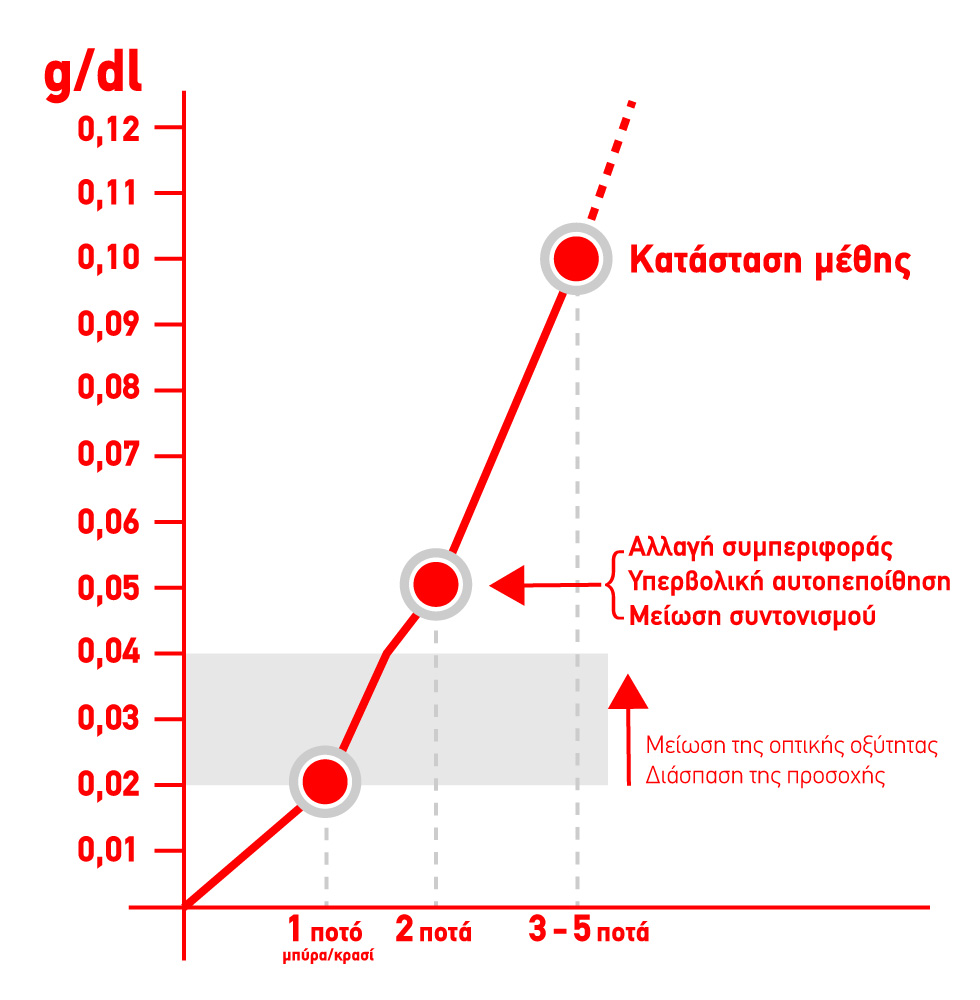
BAC 0,02 to 0,04 g/dl (With minimal blood alcohol concentration):
Even at levels below the legal limit of most countries, visual acuity begins to decrease and attention span starts to fragment.
BAC 0,05 g/dl (At the maximum limit of the WHO & the Road Traffic Code):
Behavior changes, the driver develops overconfidence, coordination decreases, and the probability of being involved in an accident increases by 1.4 times.
BAC 0,10 g/dl (State of intoxication):
The risk skyrockets, as the driver is now 5 times more likely to be involved in a fatal accident due to the dramatic slowing of reflexes and the misjudgment of distances.
Young Drivers in the Crosshairs of Risk
EU statistical analyses rank alcohol as the leading cause of death for ages 18 to 25. The combination of limited driving experience and alcohol consumption dramatically reduces the ability to react timely to unpredictable conditions on the road network, making it necessary to implement special prevention measures and stricter limits for young and professional drivers.
The Greek Reality & the Need for Road Education
In Greece, research data from the Aristotle University of Thessaloniki (AUTh) highlights a significant information gap: 30% of Greek drivers state that they do not know the exact legal alcohol limit defined by the Road Traffic Code. This lack of awareness, combined with the tendency of drivers to overestimate their condition after consuming alcohol, exacerbates the problem, particularly on provincial or demanding road networks.
The European Commission and national bodies agree that enforcement through Traffic Police checks must be complemented by a culture of personal responsibility and voluntary self-testing, ensuring that the check is always performed before the driver gets behind the wheel, protecting their own life and the lives of their fellow human beings.
Bibliography & References
- European Commission (Directorate-General for Mobility and Transport) – Prevention of driving under the influence of alcohol and drugs (Final Report)
- World Health Organization (WHO) – Drink driving: a road safety manual for decision-makers and practitioners (Second Edition)
- Υπουργείο Υγείας (Ελληνική Δημοκρατία) – Εθνικό Σχέδιο Δράσης για την Αντιμετώπιση των Βλαπτικών Συνεπειών από την Κατανάλωση του Αλκοόλ - ΠΟΡΙΣΜΑ ΟΜΑΔΑΣ ΕΡΓΑΣΙΑΣ ΓΙΑ ΤΗΝ ΑΝΤΙΜΕΤΩΠΙΣΗ ΤΩΝ ΒΛΑΠΤΙΚΩΝ ΣΥΝΕΠΕΙΩΝ ΑΠΟ ΤΗΝ ΚΑΤΑΝΑΛΩΣΗ ΑΛΚΟΟΛ
- Υπουργείο Υποδομών & Μεταφορών (Ελληνική Δημοκρατία) – Απάντηση στο πλαίσιο Κοινοβουλευτικού Ελέγχου για την Οδική Ασφάλεια και την Κυκλοφοριακή Αγωγή
- Υπουργείο Υποδομών & Μεταφορών (Ελληνική Δημοκρατία) – ΣΧΕΔΙΟ ΝΟΜΟΥ: ΝΕΟ ΚΥΡΩΤΙΚΟ ΠΛΑΙΣΙΟ ΤΟΥ ΚΩΔΙΚΑ ΟΔΙΚΗΣ ΚΥΚΛΟΦΟΡΙΑΣ ΚΑΙ ΛΟΙΠΕΣ ΔΙΑΤΑΞΕΙΣ ΓΙΑ ΤΗΝ ΑΣΦΑΛΗ ΚΙΝΗΤΙΚΟΤΗΤΑ, Άρθρο 42: Οδήγηση υπό την επίδραση οινοπνεύματος, τοξικών ουσιών ή φαρμάκων
- Αριστοτέλειο Πανεπιστήμιο Θεσσαλονίκης (ΑΠΘ) – Διπλωματική Εργασία: Διερεύνηση συμπεριφοράς οδηγών αυτοκινήτου, υπό την επήρεια αλκοόλ κάτω του νόμιμου ορίου σύμφωνα με τον Κώδικα Οδικής Κυκλοφορίας, με χρήση καινοτόμων τεχνολογιών, Τζιώκας Αλέξιος